Author: Clark Five Design

Faith Community Nursing and Health Ministry – Why? Why now? Why here? And how?

Faith Community Nursing and Health Ministry – Why? Why now? Why here? And how

Faith community nursing – in some form – has been around for many years. As the American Nurses Association Faith Community Nursing Scope and Standards, 3rd Edition states, this nursing specialty has its roots in faith and health – and in both ancient and modern faith traditions. The Faith Community Health Network summarizes this as “bridging the gap between faith and health.”

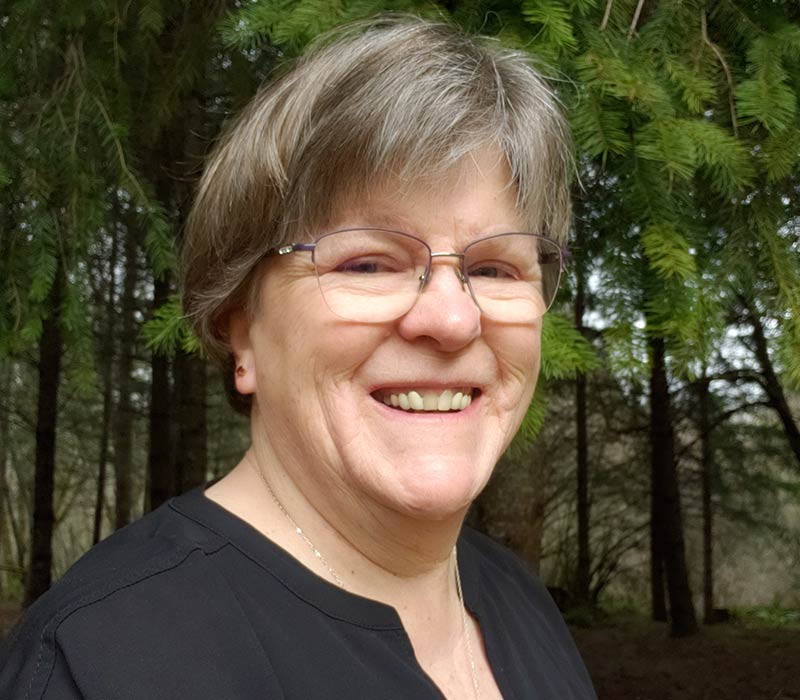
Faith community nurses (FCNs) had a robust presence in Oregon in the late 1990’s. I can attest to that; I had an opportunity to take the Foundations of Faith Community Nursing Course in 1999, but I didn’t feel called to the ministry just then, and as a mid-career graduate student, I simply couldn’t fit it in to my busy life. The course was offered frequently in the Willamette Valley. I wasn’t concerned; I would take the course later.

Fast forward to 2016, when I clearly felt the Spirit moving me away from my satisfying career as an occupational health nurse to this obscure practice of faith community nursing. As it turns out, we no longer had FCNs in my community, and there was no local training for this practice specialty! What am I doing?!

Why faith community nursing? Why now? Why here? And how was this going to happen if I could not find any FCN colleagues or even a training course? The answers were revealed, but not all at once, and, looking back, I had answers before I realized I had the questions.

Why start a faith community nursing practice?

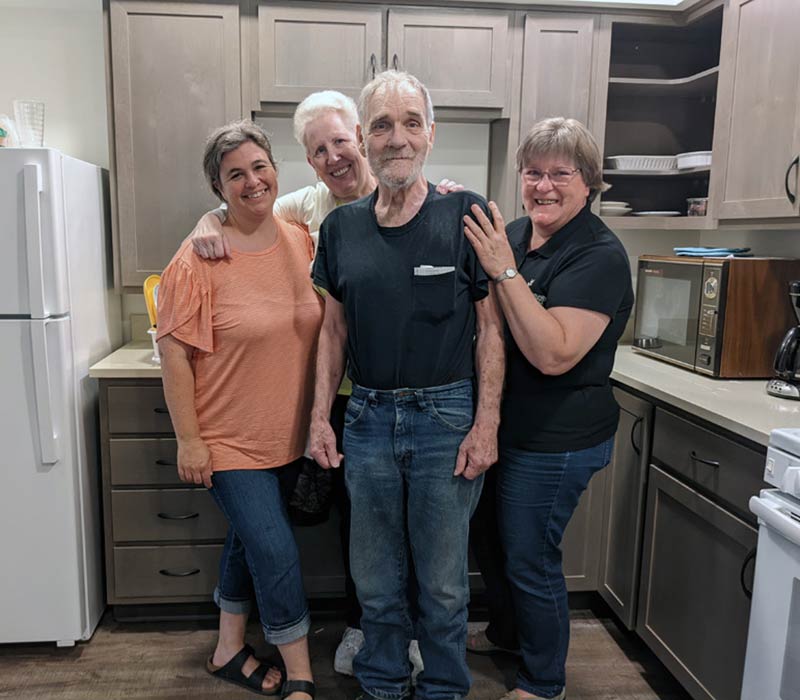
G.R. was a homeless gentleman who came to our congregation via our ministry with the Oregon Department of Corrections. Excited to be out of prison and passionate about his new faith, he eagerly joined our Sabbath services, but his attendance was sporadic. Later, when my husband bought him a new tire and I went with him to put it on G.R.’s motorhome, I learned that G.R. had undergone a major reconstructive surgery and that is why he had not been able to attend. I also learned that he had been released to his motor home after that surgery – a motorhome with no heat, no running water, and no place to park except in a rest area along the interstate.

I was shocked.

I had been away from clinical nursing for decades, but I knew this was wrong. Yet in conversations with others in our region, it sounded like it was a common occurrence. Thus, G.R. became one of many answers to the “why faith community nursing” in our congregation – transitional care. Transitional care is one way a faith community nurse can help assure that individuals in the faith community are safe and have what they need when they are discharged from the hospital or emergency department.

Since then, I have identified many more answers to “why faith community nursing?” They have names and stories. I have done everything from walking dogs, accompanying community members to medical appointments, advocating for a specific course of treatment, and filling out housing paperwork as part of a nursing care plan for someone in my faith community — but this one was the most poignant for me. G.R. shaped my faith community nursing journey in many ways.

Faith community nursing practice is traditionally geared toward health promotion. A faith community nurse in a traditional faith community nursing practice might do blood pressure screenings, provide health counseling, teach Mental Health First Aid or CPR, and have resource nurse office hours. These are all worthwhile, to be sure, but faith community nursing is so much more…. so very much more… and so desperately needed in its broadest sense.

Why start a faith community nursing practice now, and why here?

Why now… We have much generational poverty in our area of rural east Linn County, Oregon. Many residents are without stable housing, and many suffer from chronic health conditions. Some of our unsheltered have mental health challenges, including addiction, and many, especially now, coming out of the pandemic, are elderly individuals and families who could not cope, got behind financially, and ended up on the streets. We have others who are lost in our complex medical system and stymied by online communication. As a result, they miss appointments and may be sufficiently intimidated as to avoid healthcare altogether. Many of our struggling community members belong to a faith community, and they may not know help is available to connect them to community resources. A faith community nursing practice inside a larger health ministry can help to address these socio-economic needs – and with an FCN on board, can also address the chronic health conditions that often accompany them.

Why here… my answer is specific to my geographic community, but poverty is everywhere. You may not see it on your commute to work or to the grocery, and it may look like those individuals sitting on either side of you during worship have what they need, but there are people in your faith community who need help, even if they don’t look like it. Computer illiteracy/lack of computer access may not be formally recognized as a health disparity, but faith community nurses see it daily. Many of our community members simply cannot access their online health information.

The very core of nursing practice is assessment, synthesizing what is learned from that assessment into a nursing diagnosis, developing a plan to intervene for health improvement, moving forward with the plan, and evaluating. We need faith community nurses in every house of worship in every faith. Not just here. Everywhere.

So, getting back to my story...

It was late 2016 and I was about to retire from the best job I ever had with the best boss I ever had to step into something that was completely unknown to me. My husband was supportive. However, I couldn’t find a faith community nurse in my town to mentor me and I couldn’t find training for this nursing specialty. These were the first of many obstacles in this leap of faith, but it was a leap I was certain I was supposed to be taking. I worship in a small faith community in Lebanon, Oregon called Am HaSefer – People of the Book. I shared this call to service with our Rabbi and Gesher, Jonah Freeman. He felt the call, too, and was in full support, although neither of us knew what it was we were being called to, really, or how it would happen. I left my occupational health nursing career in the spring of 2017.

It took several months, but I found a Foundations of Faith Community Nursing Course about an hour away and registered for the October, 2017 class. Jonet Schutz, BSN, RN, Faith Community Nurse for Redeemer Lutheran Church and Coordinator for the Salem, OR area welcomed me into the class even though I was not in the Salem area. There were several of us in the class, all from different faith traditions.

The class was life-changing for me. Now that I had the course under my belt, I could hardly wait to get started! I thought the next big question was how to bring this to my faith community, but the call to service was bigger than that; I felt led to bring it to our entire rural community, not just my faith community. Rabbi Jonah agreed, although both of us were still unsure what “it” was, what “it” would look like, or how, exactly, to do “it.” We knew the need was great, and we agreed this could be a way to meet it.

The Lord provided the answer to this bigger “how” through unexpected open doors. I enrolled in an online FCN Coordinator Course through the Westberg Institute for Faith Community Nursing in the spring of 2018. Our congregation partnered with Faith Community Nursing and Health Ministries NorthWest, a Portland-based non-profit and Westberg Institute for Faith Community Nursing Educational Partner, and hosted our first Foundations of Faith Community Nursing Course in Lebanon, Oregon in over a decade. We held the class in donated space in Trinity Baptist Church in Lebanon. We were blessed to have Annette Stixrud, BA, RN, MS, as our Lead Educator and Jonet on hand as my coordinator mentor and graduated nine FCNs and health ministers, but only three were from Linn County.

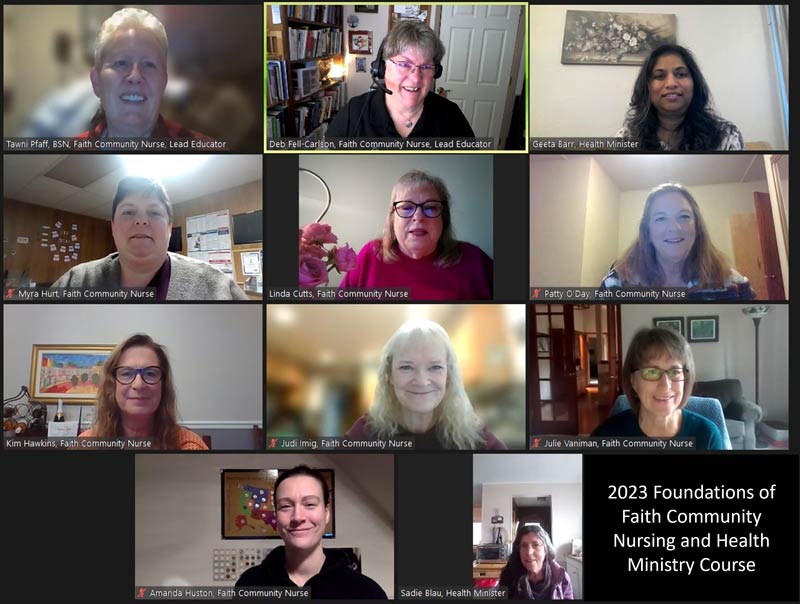
The three local area graduates from that class joined with me to form an informal coalition we called the Faith Community Health Network and began meeting in January, 2019. We met monthly; all of us called to serve and committed to find our way. Faith Community Nursing and Health Ministries NorthWest sponsored me to take the Lead Educator Course for the Foundations of Faith Community Nursing Course in the spring of 2019 and I was excited to bring the course to our local area on a regular basis to help build our team. Unfortunately, Faith Community Nursing and Health Ministries NorthWest folded late in 2019. We could not deliver the course without an approved Educational Partner. Linn-Benton Community College – Extended Learning stepped in and partnered with the Faith Community Health Network to host the course in 2020 and 2021. Our Faith Community Health Network, officially a public charity since September, 2021, is now a Westberg Institute for Faith Community Nursing Educational Partner in its own right, and we are able to deliver the course on our own and did so in 2022. The Faith Community Health Network coordinated and delivered the Foundations of Faith Community Nursing Course right through the pandemic, with classes in the fall of 2020, 2021, and 2022! These courses have helped to build our team, and we continue to meet most months – nine times a year – for education, fellowship, and networking.

The ”how” has truly been Divine Intervention. We continue to grow and our small team of faith community nurses and health ministers are active in – and beyond – their faith communities.

We are making a difference.

We have another Foundations of Faith Community Nursing and Health Ministry Course scheduled for fall, 2023. We hope you will join us! Click here to learn more about the course and to register, and email Deb at faithcommunityhealthnetwork@gmail.com to be added to the email list.

Faith for the Homeless: Nursing Group Offers Hope in Troubled Times

Faith for the Homeless: Nursing Group Offers Hope in Troubled Times
Faith Community Health Network was featured in an article by Lebanon Local on July 22, 2022.

Faith community nursing is a recognized specialty acquired through the completion of the Foundations of Faith Community Nursing course. It allows nurses and health ministers to provide care to their congregation and community by recognizing not only the wellness of the mind and body, but of the spirit as well.

Read the article and learn more about what we’re doing in your community.

The Power of Faith, Friendship & Exceptional Care

The Power of Faith, Friendship and Exceptional Care

Faith Community Health Network was featured in an article by Samaritan Health Services on June 06, 2022.

Faith community nurses are licensed nurses who have taken special training to minister to people at their places of worship. “As soon as I saw Ron’s legs and the overall condition he was in, I knew action had to be taken,” said Fell Carlson.

Read the article and learn more about what we’re doing in your community.

Faith Communities Launch Holistic Health Ministry

FOR IMMEDIATE RELEASE

Lebanon, OR – April 17, 2023 – Faith communities across Lebanon are joining forces to introduce a new initiative that brings spiritual care and nursing practice together to promote health and wellness. Faith community nursing, a specialized blend of healthcare and spiritual support, aims to address the physical, emotional, and spiritual needs of congregants in Lebanon’s religious communities.

Registered nurses who have completed specialized training in faith community nursing are working closely with religious leaders, healthcare professionals, and congregants to provide tailored healthcare services. These services include health education, counseling, advocacy, and referrals to appropriate healthcare resources. Additionally, faith community nurses lead support groups, organize health fairs, and develop wellness programs that address prevalent health issues in the community.

The impact of faith community nursing extends beyond individual congregations, reaching out to the wider community and providing much-needed support for vulnerable populations. This initiative is instrumental in addressing health disparities, particularly in underserved communities, where access to healthcare resources may be limited. By working together, faith community nurses and other healthcare professionals are striving to improve the overall health and well-being of Lebanon’s residents.

Faith community nursing places a strong emphasis on spiritual care and the importance of robust faith communities. This approach helps individuals navigate through difficult times, cope with illness, and find meaning and purpose in their lives. As Lebanon’s faith community nursing initiative continues to grow, the potential to transform the health landscape for the better becomes increasingly evident.

For more information about faith community nursing in Lebanon, please contact Faith Community Health Network.

About Faith Community Health Network
Faith Community Health Network is dedicated to promoting health and wellness within Lebanon’s faith communities. By providing support, education, and advocacy, we aim to improve the overall health and well-being of our community members. Our organization is committed to fostering collaboration between faith communities, healthcare professionals, and other stakeholders to create a supportive and compassionate environment for all.

Lebanon’s Faith Community Nursing: A Holistic Health Ministry

Lebanon, OR – A new initiative is taking root in Lebanon’s faith communities, bringing spiritual care and nursing practice together to promote health and wellness. Known as faith community nursing, this holistic approach to health aims to address the physical, emotional, and spiritual needs of congregants. The ministry has grown in recent years as faith communities seek to offer more comprehensive support and care to their members.

Lebanon’s faith community nurses are registered nurses who have completed specialized training to provide healthcare services tailored to the unique needs and beliefs of their respective faith communities. They collaborate closely with religious leaders, healthcare professionals, and congregants to offer services such as health education, counseling, advocacy, and referrals to appropriate healthcare resources. Faith community nurses in Lebanon also lead support groups, organize health fairs, and develop wellness programs that address prevalent health issues in the community.

The impact of faith community nursing in Lebanon extends beyond individual congregations, reaching out to the wider community and providing much-needed support for vulnerable populations. By addressing health disparities and working to improve access to healthcare resources, faith community nurses play a crucial role in Lebanon’s overall health and well-being. Their emphasis on spiritual care and the importance of strong faith communities helps individuals navigate through difficult times, cope with illness, and find meaning and purpose in their lives. As Lebanon’s faith community nursing initiative continues to grow, its potential to transform the health landscape for the better becomes increasingly evident.

Faith Community Nursing: A Holistic Approach to Health and Healing

Introduction

Faith community nursing, also known as parish nursing or congregational nursing, is a unique blend of spiritual care and nursing practice that focuses on promoting health and wellness within faith communities. As an integral part of the ministry, faith community nurses work closely with religious leaders, congregants, and other healthcare professionals to address the physical, emotional, and spiritual needs of their community members. In a world where healthcare has become increasingly impersonal and fragmented, faith community nursing offers a compassionate, holistic approach to healing that empowers individuals and fosters a sense of belonging.

Role and Scope of Practice

Faith community nurses are registered nurses who have undergone specialized training in the field, enabling them to provide healthcare services that are sensitive to the unique needs and beliefs of their respective faith communities. Their scope of practice encompasses a wide range of services, including health education, counseling, advocacy, and referral to appropriate healthcare resources. They may also lead support groups, organize health fairs, and implement wellness programs that address prevalent health issues in their community. By working closely with religious leaders, faith community nurses help create a supportive environment where congregants feel comfortable discussing their health concerns and seeking guidance.

Impact and Benefits

The impact of faith community nursing goes beyond the confines of the congregation, reaching out to the wider community and providing much-needed support for vulnerable populations. Faith community nurses can be instrumental in addressing health disparities, particularly in underserved communities where access to healthcare resources may be limited. They are well-positioned to identify gaps in healthcare services, advocate for change, and collaborate with other healthcare professionals to improve the overall health and well-being of their community. Additionally, their emphasis on spiritual care and the importance of a strong faith community can help individuals navigate through difficult times, cope with illness, and find meaning and purpose in their lives.